Surgery is often an important step toward feeling better. Whether it’s a planned procedure, an injury repair, or treatment for a medical condition, most people look forward to getting through surgery and returning to everyday life.
But healing doesn’t always happen as quickly as we’d like.
Some people recover steadily, while others find that wounds take longer to close, swelling persists, or damaged tissue needs additional support. When recovery moves more slowly, understanding what’s happening inside the body can help patients make informed decisions about their care.
For certain surgical complications, hyperbaric oxygen therapy after surgery may provide additional support by helping oxygen reach tissue that is struggling to heal.
Why Healing After Surgery Takes Time
Even when a procedure goes exactly as planned, surgery creates an injury that the body must repair.
Following surgery, the immune system begins responding to damaged tissue. Cells work to control inflammation, rebuild structures, produce collagen, and develop new blood vessels.
These processes require energy, nutrients, and a reliable supply of oxygen.
The amount of time needed for recovery depends on many factors, including the type of surgery, the location of the incision, the patient’s overall health, and how well blood reaches the healing area.
A longer recovery doesn’t automatically mean something is wrong. However, some wounds need closer evaluation or additional treatment to heal successfully.
What Can Slow Surgical Wound Healing?
Several factors can affect how efficiently the body repairs tissue after surgery.
- Reduced circulation: Healthy blood flow carries oxygen and nutrients to recovering tissue. When circulation is limited, healing may take longer.
- Diabetes: Changes in circulation, immune function, and blood sugar regulation can make wound healing more difficult.
- Infection: An infection can interfere with normal tissue repair and may require additional medical treatment.
- Previous radiation treatment: Radiation can damage small blood vessels and surrounding tissue, sometimes making later surgical healing more complicated.
- Pressure or tension on the wound: Excessive pressure, movement, or tension can interfere with healing, particularly in areas that are difficult to protect.
- Nutrition and overall health: Protein, vitamins, hydration, medications, and underlying medical conditions can all influence recovery.
Identifying the factors affecting a wound is an important part of choosing the right treatment.
Why Oxygen Is So Important After Surgery
Oxygen does much more than keep us breathing. It supports many of the cellular processes involved in repairing damaged tissue.
The body uses oxygen to produce energy, support immune defenses, build collagen, and develop new blood vessels.
When blood flow is reduced, or tissue has been significantly damaged, the amount of oxygen reaching a surgical wound may be insufficient for optimal healing.
This is particularly important when tissue has been compromised by poor circulation, previous radiation, or complications involving skin grafts and flaps.
Improving oxygen availability can be one way to support the body’s natural repair processes.
How Hyperbaric Oxygen Therapy Works After Surgery
During hyperbaric oxygen therapy, patients breathe 100% oxygen inside a chamber where atmospheric pressure is increased.
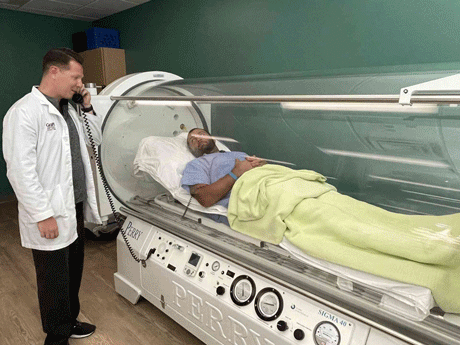
Under these conditions, substantially more oxygen dissolves into the blood plasma, allowing elevated oxygen levels to reach tissues throughout the body.
For appropriately selected patients, HBOT can support processes involved in tissue repair, including collagen formation, new blood vessel development, and certain immune functions.
Repeated treatments may be particularly useful when damaged tissue has difficulty receiving adequate oxygen through normal circulation.
However, HBOT after surgery is not routinely recommended for every surgical patient. Its role depends on the condition being treated and the medical circumstances involved.
When Might HBOT Be Recommended Following Surgery?
Hyperbaric oxygen therapy has an established role in several conditions that can involve difficult surgical healing.
Compromised Skin Grafts and Flaps
Skin grafts and surgical flaps are sometimes used to repair areas where tissue has been removed or damaged.
These procedures depend on adequate blood supply to keep the transferred tissue healthy.
When a graft or flap becomes compromised by insufficient circulation or oxygen delivery, HBOT may be used as an additional treatment to help preserve threatened tissue.
HBOT is not necessary for healthy, uncomplicated grafts or flaps.
Surgery Involving Previously Irradiated Tissue
Radiation therapy can cause lasting changes to small blood vessels and healthy tissue.
When surgery is later performed in an area that previously received radiation, the tissue may have a reduced ability to heal.
In selected cases, HBOT may be recommended to support treatment of delayed radiation injury and help improve the tissue environment before or after a procedure.
Certain Serious Infections and Wound Complications
Some severe infections and tissue injuries require specialized treatment, which may include surgery, antibiotics, wound care, and other medical interventions.
HBOT may serve as an adjunctive treatment for certain recognized conditions, such as selected necrotizing soft tissue infections.
The important distinction is that HBOT supports a comprehensive treatment plan. It does not replace surgery, infection management, or other necessary medical care.
Recovery is About More Than One Treatment
When healing takes longer, it’s natural to look for something that might help.
But successful recovery rarely depends on a single therapy.
A thoughtful care plan may include wound evaluation, infection control, circulation assessment, proper nutrition, pressure management, rehabilitation, and ongoing follow-up.
For patients with specific complications, hyperbaric oxygen therapy may provide another way to support the healing environment.
The goal is not simply to accelerate recovery. It’s to address the factors preventing tissue from healing effectively.
Helping Your Body Move Forward
Recovering from surgery requires patience, but it should also come with clear information and appropriate support.
If a surgical wound is taking longer to heal, your healthcare team can help determine whether the recovery is progressing normally or whether something needs additional attention.
For certain patients, hyperbaric oxygen therapy after surgery may be an important part of that conversation.
At Baromedical Associates, our team helps patients understand how HBOT works, the conditions it may support, and whether it could have a place in their recovery plan.
To learn more or see if Hyperbaric Oxygen Therapy is right for you, contact our team today!