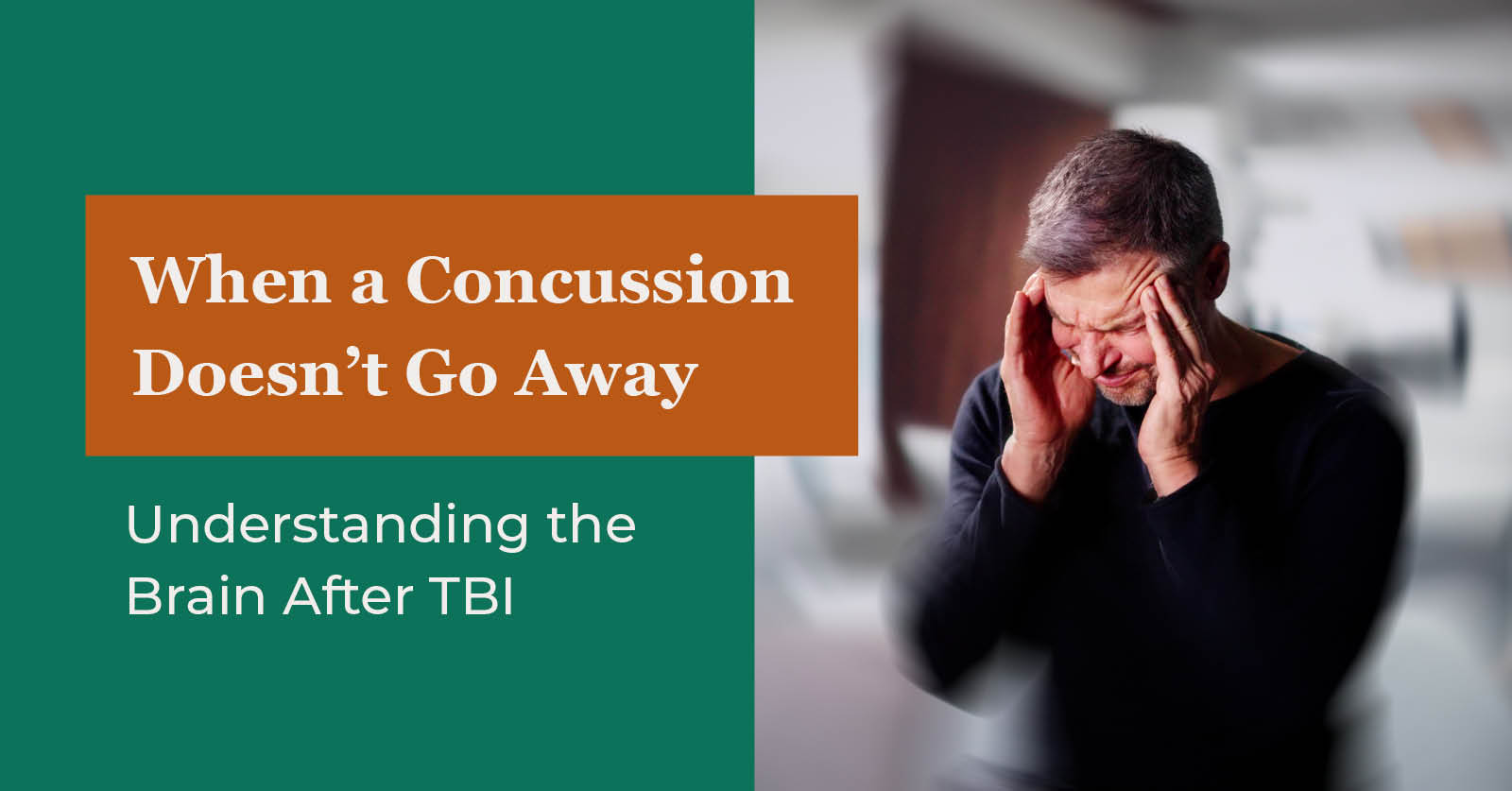
A concussion can happen in an instant. Recovery doesn’t always happen nearly as quickly.
For many people, symptoms improve over days or weeks. But others continue experiencing headaches, brain fog, fatigue, memory problems, sleep changes, dizziness, or difficulty concentrating long after the original injury.
When that happens, it can be frustrating and confusing. The injury may no longer be visible, but the person experiencing it knows something still isn’t right.
Researchers studying traumatic brain injury are working to better understand why symptoms sometimes persist and whether therapies such as HBOT for concussion recovery could have a role in supporting the injured brain. Read more about a recent study on HBOT and concussions published on Scientific Reports →
A Concussion is a Brain Injury
The word “concussion” can sometimes make the injury sound relatively minor. Medically, however, a concussion is a form of mild traumatic brain injury, or TBI.
A sudden impact or rapid movement can cause the brain to move within the skull, triggering a complex series of changes.
Those changes can affect how brain cells use energy, communicate with one another, regulate blood flow, and perform normal functions.
The initial injury may happen quickly, but the biological effects don’t necessarily disappear when the headache does.
Why do concussion symptoms sometimes persist?
The brain has enormous capacity for recovery, but recovery after TBI varies considerably from one person to another.
Persistent symptoms can include:
- Headaches
- Difficulty concentrating
- Memory problems
- Brain fog
- Fatigue
- Dizziness or balance problems
- Sleep disturbances
- Sensitivity to light or sound
- Changes in mood or emotional regulation
There isn’t always one simple explanation for why these symptoms continue.
Researchers continue studying changes in brain metabolism, blood flow, inflammation, neural networks, and other processes that may contribute to persistent symptoms following traumatic brain injury.
The Brain Has an Extraordinary Need for Oxygen
Although the brain represents only a small portion of total body weight, it requires a tremendous amount of energy to function.
That energy depends heavily on oxygen.
Brain cells need a continuous oxygen supply to communicate, maintain themselves, and perform the countless tasks involved in movement, memory, attention, emotion, and thought.
This relationship between oxygen and brain function is one reason researchers have become interested in hyperbaric oxygen therapy following certain brain injuries.
What Researchers Are Learning About HBOT for Concussion Recovery
During hyperbaric oxygen therapy, patients breathe 100% oxygen in a pressurized chamber. The increased pressure allows considerably more oxygen to dissolve into the bloodstream and become available to tissues throughout the body.
Researchers studying HBOT for concussion recovery and traumatic brain injury have explored whether this increased oxygen availability may influence processes such as cerebral blood flow, inflammation, cellular metabolism, and neuroplasticity.
Neuroplasticity refers to the brain’s ability to reorganize, adapt, and form new connections. It is one of the mechanisms that helps the nervous system recover and compensate following injury.
Some studies have reported improvements in symptoms and measures of cognitive function following HBOT in people with persistent effects of TBI. However, research continues, and questions remain about which patients may benefit most, optimal treatment protocols, and how HBOT should fit within broader concussion care.
HBOT for TBI Remains an Emerging Application
It’s important to distinguish promising research from established medical indications.
Hyperbaric oxygen therapy for concussion and traumatic brain injury is considered an off-label application. It is not currently among the conditions for which HBOT is routinely covered by insurance.
That doesn’t mean the therapy hasn’t been studied or that patients cannot receive it. It means the evidence and clinical use are still evolving.
A knowledgeable hyperbaric physician can help patients understand the available research, their individual circumstances, and whether HBOT is reasonable to consider as part of a broader recovery plan.
Recovery Is About More Than One Therapy
Persistent concussion symptoms can have multiple causes and may require different types of care.
Depending on the individual, recovery may involve neurological evaluation, physical or vestibular therapy, vision therapy, cognitive rehabilitation, sleep support, gradual return to activity, and other treatments.
HBOT should be viewed within that larger picture.
The goal isn’t simply to “get more oxygen.” It’s to determine whether changing oxygen availability and the physiological environment surrounding injured tissue may support processes involved in recovery.
When the Injury Is Over but the Symptoms Aren’t
Living with persistent concussion symptoms can be particularly difficult because other people may assume the injury has already healed.
But a normal-looking day from the outside doesn’t necessarily reflect what is happening inside the brain.
Research into traumatic brain injury continues to reveal how complex recovery can be. It is also helping physicians explore new ways to support people whose symptoms haven’t resolved as expected.
For those individuals, learning about HBOT for concussion recovery may be one part of understanding what options remain.
If you or someone you love continues to experience symptoms after a concussion or traumatic brain injury, Baromedical Associates can help you learn more about HBOT, the current research, and whether it may be appropriate to discuss as part of your recovery plan.
To learn more or see if Hyperbaric Oxygen Therapy is right for you, contact our team today!