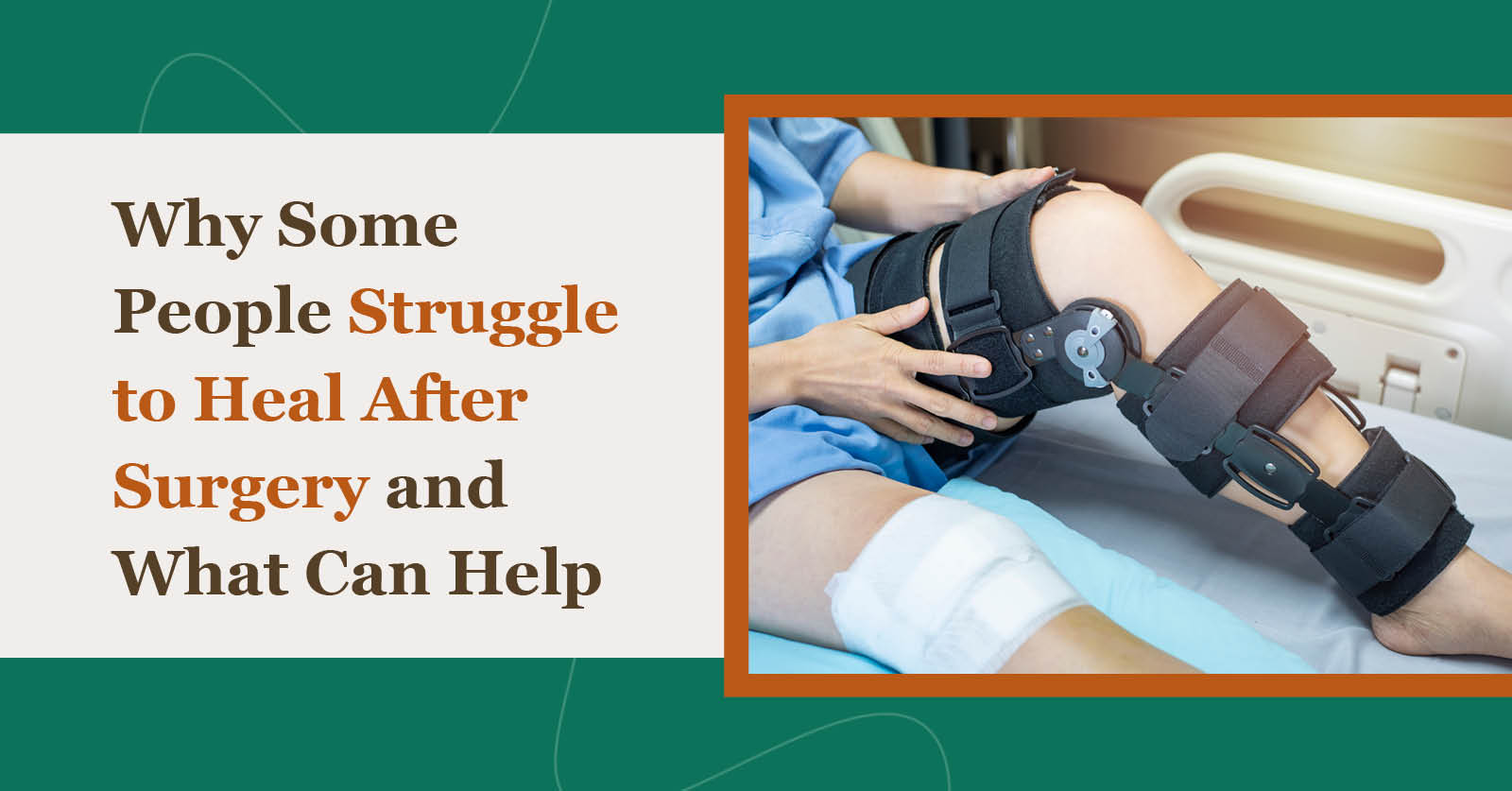
We tend to think of surgery as the event and recovery as what happens afterward. But healing after surgery is anything but passive. The moment a procedure ends, the body begins an enormous amount of work to repair damaged tissue, control inflammation, prevent infection, and rebuild what was disrupted.
Most of the time, that process moves forward as expected. Sometimes it doesn’t.
When recovery seems unusually slow or a surgical wound struggles to heal, the question becomes why.
What happens in the body after surgery?
Even when surgery goes exactly as planned, it creates a controlled injury that the body must repair.
Blood vessels and tissue have been disrupted. The immune system responds. New cells must be produced, collagen must be formed, and damaged structures must begin rebuilding.
Different stages overlap as recovery progresses. That work requires energy, nutrients, healthy circulation, and plenty of oxygen.
This is why two people can undergo similar procedures and have very different recovery experiences.
Why does healing after surgery sometimes slow down?
Many factors influence how efficiently the body repairs itself.
Age and overall health matter, but they are only part of the picture. Circulation, nutrition, infection, diabetes, smoking, medications, and the extent of the surgery itself can all affect recovery.
Previous medical treatments can matter too. Tissue that has been exposed to radiation, for example, may have reduced circulation that makes later surgical healing more difficult.
In other situations, blood flow to tissue may become compromised during or after a procedure. When tissue receives less blood, it also receives less oxygen. That can become a significant obstacle to healing.
Oxygen is Doing More Work Than You Might Think
We usually think about oxygen in terms of breathing, but cells throughout the body depend on it.
During surgical recovery, oxygen helps provide the energy cells need to rebuild tissue. It also supports collagen production, immune activity, and the formation of new blood vessels.
Good circulation normally handles oxygen delivery.
When circulation becomes compromised, however, injured tissue may not receive enough oxygen to keep the healing process moving efficiently.
This helps explain why improving oxygen availability has become an important part of treating certain difficult wounds and compromised tissues.
Where Hyperbaric Oxygen Therapy May Fit
Hyperbaric oxygen therapy, or HBOT, allows a patient to breathe 100 percent oxygen in a pressurized medical chamber.
Under increased pressure, more oxygen dissolves into the blood plasma. This allows oxygen to circulate at levels that normal breathing cannot achieve. HBOT is not something every patient needs after surgery, nor is it a shortcut around normal recovery.
Its role becomes particularly relevant when tissue is compromised or another medical condition is interfering with the body’s ability to heal normally.
For example, HBOT has established medical applications involving certain chronic wounds, radiation tissue injury, and compromised skin grafts and flaps.
Physicians may also explore HBOT in other situations based on a patient’s individual circumstances and the available evidence.
What about HBOT before surgery?
Sometimes the conversation about oxygen and surgery begins before the procedure takes place.
Patients with known tissue damage or other risk factors may require a more comprehensive plan for supporting healing. In certain situations, physicians may incorporate hyperbaric oxygen therapy before and after a planned procedure.
This can be particularly relevant when surgery involves tissue previously damaged by radiation.
The important point is that HBOT should be integrated thoughtfully into medical care. It is not simply an add-on treatment for anyone having surgery.
When should slow healing be evaluated?
Recovery rarely happens in a perfectly straight line. Some days feel better than others, and different procedures naturally require different amounts of time.
Still, persistent problems deserve attention.
A wound that is not progressing as expected, tissue that begins deteriorating, increasing pain, drainage, signs of infection, or other unexpected changes should be discussed with the treating physician.
The goal is not simply to make healing happen faster. It is to understand what may be preventing normal healing in the first place.
Once that problem is identified, the care team can determine which tools may help.
Creating Better Conditions for Recovery
Your body does the actual work of healing after surgery. Medicine’s role is often to create the best possible conditions for that work to happen.
Sometimes that means rest and time. Sometimes it means nutrition, wound care, physical therapy, infection management, or better control of an underlying medical condition. And for appropriate patients, it may include hyperbaric oxygen therapy.
If your recovery has stalled or a surgical wound is struggling to heal, learning why is more important than simply waiting longer. Understanding what’s getting in the way can help you and your healthcare team determine the best path forward.
To learn more or see if Hyperbaric Oxygen Therapy is right for you, contact our team today!