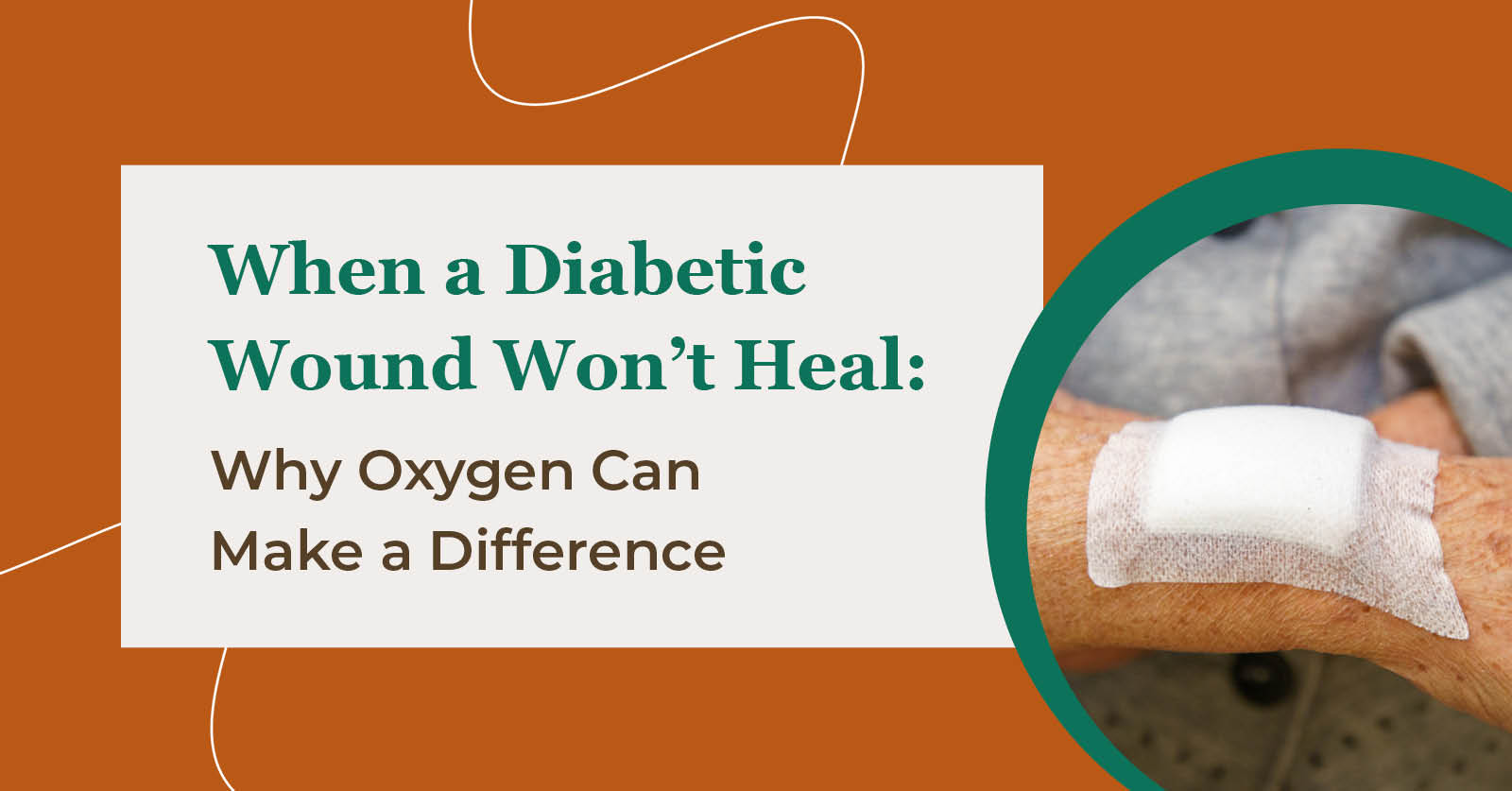
A small cut on the foot may not seem like a serious problem. But for someone living with diabetes, even a minor wound can sometimes become difficult to heal.
Diabetes can affect circulation, sensation, immune function, and the body’s ability to repair damaged tissue. When several of these factors occur together, a wound that would normally heal can linger for weeks or months and become increasingly difficult to treat.
For certain patients with serious diabetic foot ulcers, hyperbaric oxygen therapy for diabetic wounds may become an important part of a comprehensive wound care plan.
Why are diabetic wounds so difficult to heal?
Healing is an active process. The body must control infection, remove damaged tissue, build new tissue, produce collagen, and create blood vessels to support the recovering area.
All of those processes require oxygen.
Diabetes can make that process more difficult in several ways. Reduced circulation may limit the amount of oxygen and nutrients reaching the feet. Nerve damage can make it harder to feel an injury when it first occurs. Changes in immune function can also make infection more difficult to fight.
As a result, something as simple as a blister, pressure point, or small cut can become a much larger problem.
The Problem With a Wound You Can’t Feel
One of the challenges with diabetic foot wounds is that pain isn’t always a reliable warning sign.
Diabetic neuropathy can reduce sensation in the feet. A person may continue walking on an injured area without realizing how much pressure or damage is occurring. By the time the wound is discovered, it may already require significant treatment.
This is one reason regular foot checks are so important for people with diabetes. Changes in the skin, swelling, drainage, discoloration, or a wound that isn’t improving deserve attention even if they don’t hurt.
Why Oxygen Matters for Diabetic Wound Healing
Every stage of wound repair depends on adequate oxygen.
Cells need oxygen to produce energy. The immune system uses it while fighting certain bacteria. Oxygen is also involved in collagen production and the development of new blood vessels.
When circulation is compromised, damaged tissue may not receive enough oxygen to support these processes effectively.
That creates a difficult cycle: the wound needs oxygen to heal, but the damaged area may have trouble receiving enough of it.
How Hyperbaric Oxygen Therapy for Diabetic Wounds Works
During hyperbaric oxygen therapy, a patient breathes 100% oxygen inside a chamber where atmospheric pressure is increased.
Under these conditions, substantially more oxygen can dissolve into the blood plasma. This allows oxygen to reach tissues in concentrations that aren’t possible under normal atmospheric conditions.
Repeated HBOT treatments can support several processes involved in wound healing, including new blood vessel formation, immune activity, collagen production, and the body’s response to damaged tissue.
For appropriately selected diabetic wounds, this increased oxygen availability can help create a better environment for healing.
Is HBOT used for every diabetic foot wound?
No. HBOT for diabetic wounds is not appropriate for every cut, sore, or foot ulcer.
Hyperbaric oxygen therapy is generally considered for more serious diabetic lower-extremity wounds that meet specific medical criteria, particularly when standard wound care alone has not produced adequate healing.
Treatment is also not performed in isolation.
A comprehensive plan may include wound cleaning and debridement, infection management, pressure relief or offloading, blood sugar management, vascular evaluation, nutrition, and other treatments based on the patient’s individual needs.
HBOT supports that larger healing process rather than replacing it.
Don’t Wait for a Small Wound to Become a Big Problem
One of the most important things someone with diabetes can do is pay attention early.
A wound that isn’t improving should not simply be given more time indefinitely. Early evaluation can help identify infection, circulation problems, pressure, or other factors interfering with healing before complications become more serious.
And when a diabetic wound has already become difficult to heal, understanding all available treatment options matters.
Creating Better Conditions for Healing
A non-healing diabetic wound can affect far more than the foot. It can limit mobility, independence, work, and everyday life. In severe cases, complications can become limb-threatening.
The goal of advanced wound care is to give damaged tissue the best possible opportunity to heal.
For certain patients, hyperbaric oxygen therapy for diabetic wounds can be an important part of that process by helping oxygen reach tissue that has been struggling to repair itself.
If you or someone you love is dealing with a diabetic wound that isn’t healing as expected, the team at Baromedical Associates can help you understand whether HBOT may be an appropriate part of the treatment plan.
To learn more or see if Hyperbaric Oxygen Therapy is right for you, contact our team today!