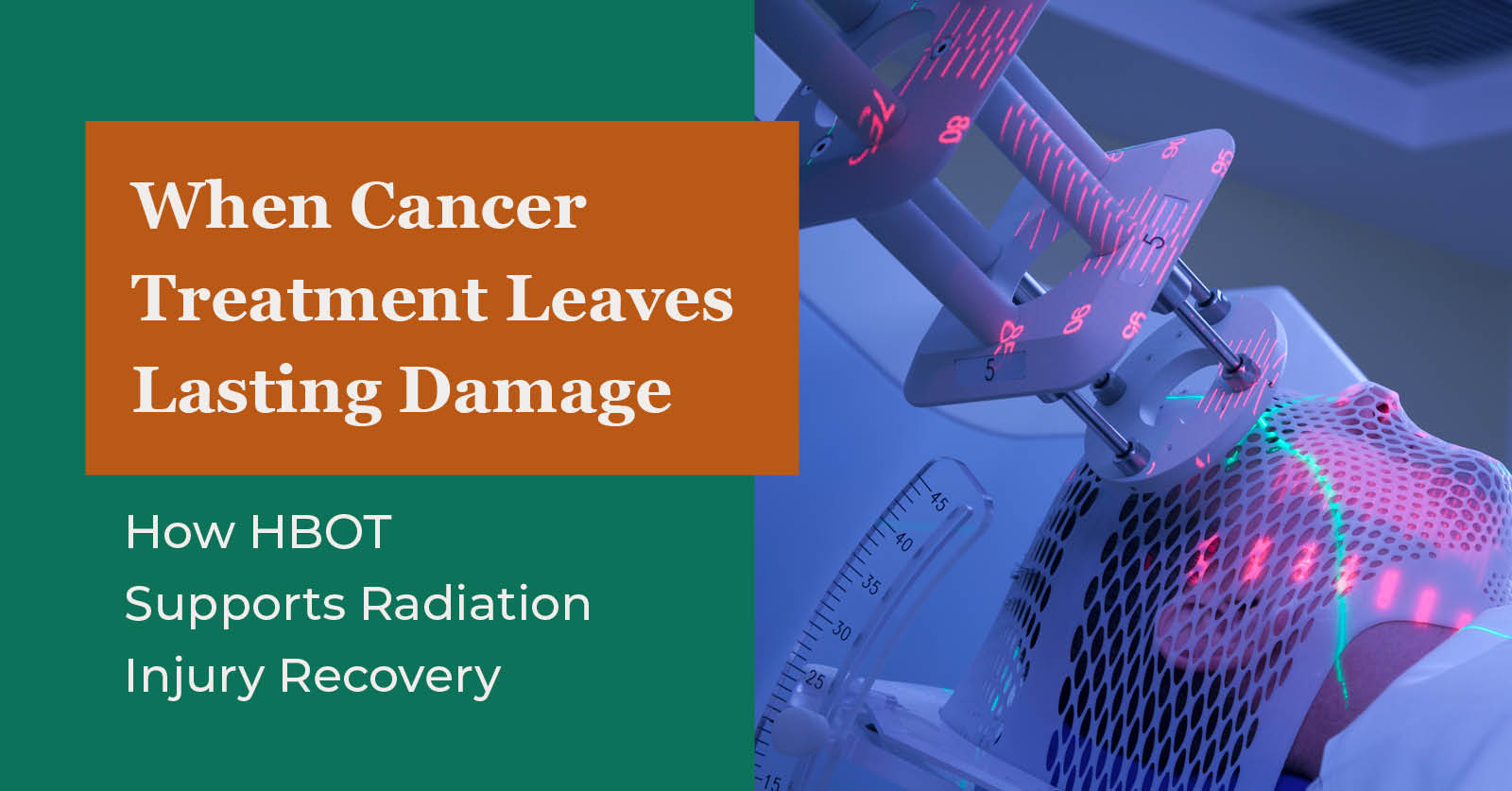
Cancer treatment can save a life, but sometimes its effects continue long after treatment ends. Radiation therapy is designed to destroy cancer cells, yet healthy tissue in the treatment area can also sustain damage. For some patients, those changes appear months or even years later. Hyperbaric oxygen therapy for radiation injury is an established medical treatment that can help support healing in certain types of radiation-damaged tissue.
For someone who thought cancer treatment was behind them, developing a new problem years later can be frustrating and confusing. Understanding why it happens is an important first step.
Why can radiation damage appear years later?
Radiation works by damaging the DNA of cancer cells so they can no longer grow and divide normally. Unfortunately, radiation can also affect healthy cells and small blood vessels within the treatment area.
Over time, those blood vessels may become narrowed or damaged. This can reduce circulation and leave surrounding tissue with less oxygen than it needs to remain healthy and repair itself.
The result is known as delayed radiation injury.
Depending on where radiation was delivered, patients may experience problems involving…
- skin
- soft tissue
- bone
- bladder
- bowel
- jaw
- other areas
What can make these injuries particularly surprising is their timing. A patient may finish cancer treatment successfully and feel well for years before symptoms of radiation damage emerge.
What does oxygen have to do with radiation injury?
Healthy tissue depends on a steady supply of oxygen and nutrients delivered through the bloodstream.
When radiation damages small blood vessels, that supply can become compromised. Tissue with poor circulation has a harder time maintaining itself and an even harder time healing after an injury or procedure.
This is especially important if someone later needs surgery or dental work in an area that previously received radiation.
Simply waiting longer may not solve the problem if the tissue lacks the resources needed to heal.
How Hyperbaric Oxygen Therapy for Radiation Injury Works
During hyperbaric oxygen therapy, patients breathe 100 percent oxygen inside a carefully controlled pressurized chamber.
The increased pressure allows significantly more oxygen to dissolve into the plasma portion of the blood. This creates an oxygen-rich environment that can help deliver oxygen to compromised tissues.
For radiation injury, however, the goal extends beyond temporarily increasing oxygen levels.
Repeated HBOT treatments can help stimulate angiogenesis, the process through which the body develops new blood vessels. Over time, improved vascularity can help create healthier tissue that is better equipped to maintain and repair itself.
This is one reason HBOT is used differently from simply breathing supplemental oxygen at normal atmospheric pressure.
Where is HBOT used for radiation damage?
Hyperbaric medicine has an established role in treating delayed radiation injuries involving soft tissue and bone.
Depending on the individual patient and location of the original radiation treatment, physicians may consider HBOT for conditions involving areas such as:
- The jaw and surrounding tissue
- The head and neck
- The bladder
- The bowel and rectal tissue
- Skin and soft tissue
- Bone affected by radiation damage
HBOT may also be incorporated into a treatment plan when surgery or dental procedures are necessary in previously irradiated tissue.
Treatment decisions should always be based on the patient’s individual history, symptoms, and medical needs.
Treatment is About More Than the Original Cancer
For cancer survivors, this distinction matters.
Delayed radiation injury does not necessarily mean that cancer has returned. It can instead be a consequence of the treatment that successfully addressed the cancer years earlier.
That can be reassuring, but it can also introduce a new challenge.
Patients may find themselves navigating symptoms they never expected after believing that chapter of their medical care was finished. Recognizing radiation injury and understanding the treatment options available can help make that next chapter less uncertain.
Helping Damaged Tissue Heal Again
Radiation treatment is sometimes essential to fighting cancer. Unfortunately, healthy tissue can carry some of its effects long after treatment ends.
Hyperbaric oxygen therapy cannot undo the radiation a patient received. What it can do, in appropriate cases, is help improve the environment surrounding damaged tissue by increasing oxygen availability and supporting the development of new blood vessels.
If you or someone you love has previously undergone radiation therapy and is now experiencing difficulty healing or other problems within the treated area, it may be worth asking whether radiation injury could be contributing.
Understanding the cause can open the door to treatment options you may not have known were available. To learn more or see if Hyperbaric Oxygen Therapy is right for you, contact our team today!