Living with diabetes often means paying close attention to how your body heals, especially when it comes to wounds on your feet or lower legs. When healing slows down, daily life becomes stressful and uncomfortable. At Baromedical Associates, we use hyperbaric oxygen therapy for diabetes to support people who are dealing with long-lasting wounds and complications. Our team has decades of experience, international recognition, and four trusted Dallas-area clinics dedicated to safe and effective care.
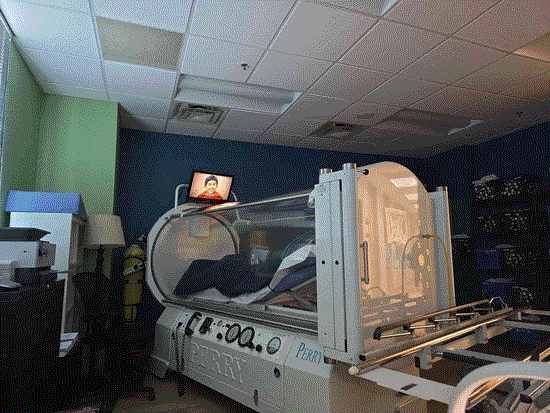
Hyperbaric oxygen therapy, or HBOT, is a medical treatment where you breathe nearly 100% pure oxygen inside a specially designed hyperbaric chamber at pressures greater than normal atmospheric pressure. The high-pressure environment allows your body to absorb substantially more oxygen than usual, which helps support healing in tissues that are starved of oxygen (hypoxic). The extra oxygen promotes new blood vessel formation, reduces inflammation, and enhances your body’s ability to repair itself, especially in tissues struggling to heal.
Our team uses HBOT as a well-recognized adjunctive therapy, which means it works alongside your standard wound care and diabetes management, not instead of them.
Diabetes (most often type 2, but sometimes type 1) is a condition in which your body either doesn’t produce enough insulin or doesn’t use it effectively. That results in elevated blood glucose (sugar) levels over time. These higher levels can damage nerves, blood vessels, and tissues throughout your body.
Common symptoms of diabetes include:
There are several interconnected reasons why diabetes raises the risk of foot ulcers and why those ulcers may heal slowly:
HBOT increases the oxygen concentration in your bloodstream far above normal levels. That oxygen saturates damaged tissue and creates a healthier environment for repair. Patients often describe HBOT as calming and surprisingly comfortable. Here’s how HBOT helps diabetic wound care:
We commonly treat these concerns:
For diabetes-related wounds, many insurance providers recognize HBOT as an approved therapy when ulcers are serious, chronic, or non-healing. Coverage typically depends on wound severity, a history of standard wound care, and proper documentation.
Our staff helps gather the medical notes, wound history, and required materials needed to support an insurance review.
Most sessions last 60 to 90 minutes, depending on your personalized treatment plan.
Many people start with 20–40 sessions. Some notice improvement earlier, but the total number depends on the severity of the wound and how your body responds.
Research shows HBOT, as an adjunct to standard care, significantly improves the rate of complete healing of diabetic foot ulcers and reduces major amputation risk. For example, an analysis found HBOT reduced the odds of non-healing (OR = 0.29) and reduced major amputations (RR = 0.60) in diabetic foot ulcers.
That said, results vary depending on patient selection, wound severity, circulation status, and how well other treatments are applied.
HBOT does not cure diabetes. Instead, it supports healing and improves complications related to poor circulation, nerve damage, and chronic wounds.
Common requirements include:
If you’re dealing with a stubborn wound and exploring hyperbaric oxygen therapy for diabetes, our Dallas-area team is here to help. Baromedical Associates brings decades of expertise, advanced facilities, and a patient-centered approach to every person we treat.
Contact us today to schedule your consultation or learn more about HBOT for diabetes at one of our four Dallas-area locations.